Photographing a sleeping puppy is easy; capturing a Border Collie mid-frisbee catch or a Husky charging through a trail is a different beast entirely. Action photography requires a blend of technical precision, an understanding of canine behavior, and a healthy dose of patience. So today we bring a guide for action dog photography tips for cameras and phones.
If you’ve ever ended a session with nothing but a gallery of blurry tails and out-of-focus ears, this guide is for you.
1. The Need for Speed: Shutter Settings
In the world of action sports like Canicross or Agility, milliseconds matter. To “freeze” a dog in motion without motion blur, you need a fast shutter speed.
-
The Golden Rule: Aim for a shutter speed of at least 1/1000s. If the dog is sprinting directly toward you, you might even need to push it to 1/2000s.
-
Aperture & Depth: Using a wide aperture (like or ) helps create that beautiful “bokeh” (blurred background) that makes the dog pop, but it also lets in more light, allowing for those faster shutter speeds.
2. Mastering Focus: AF-C is Your Best Friend
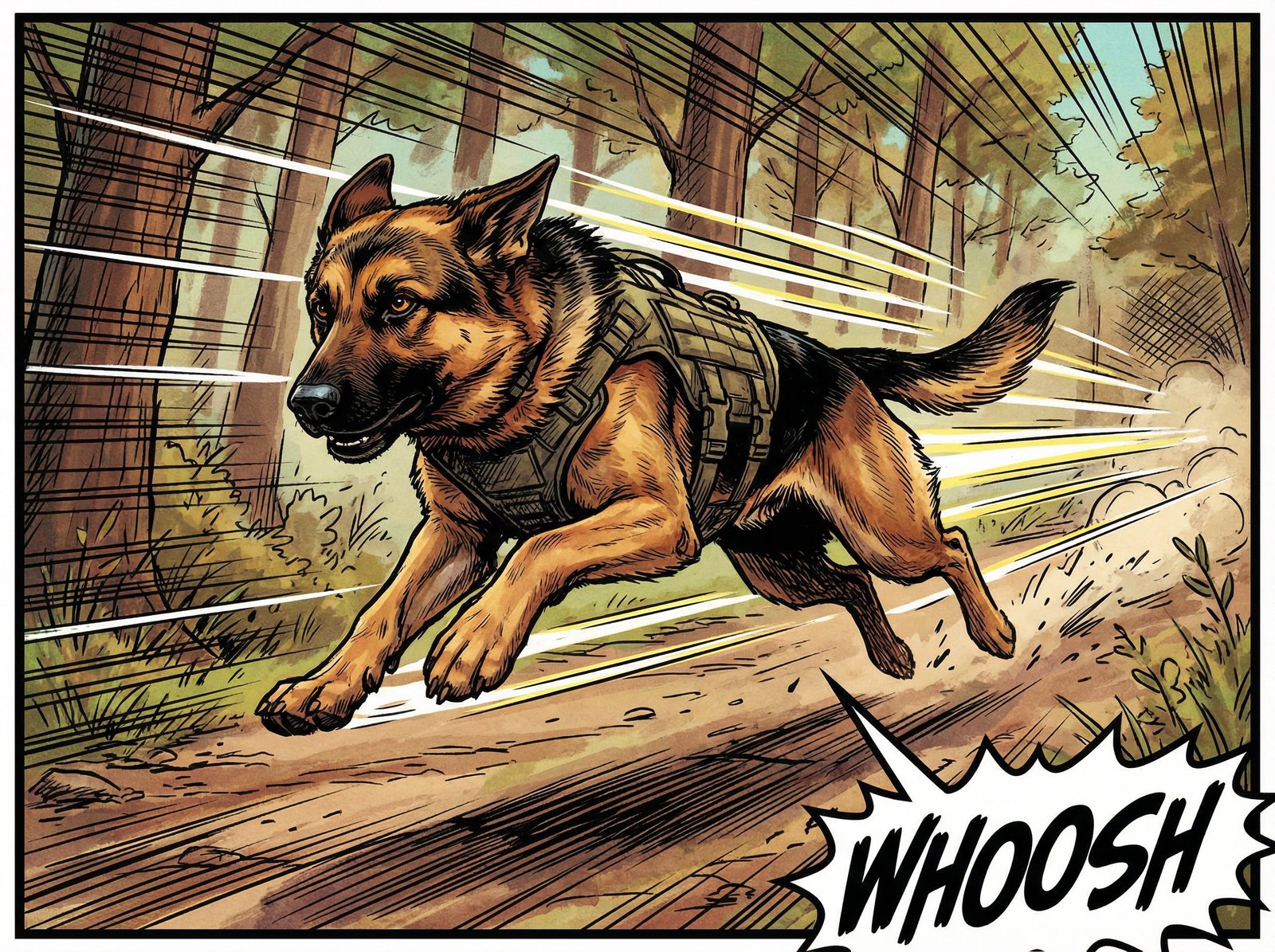
Static focus won’t cut it here. You need to switch your camera’s focus mode to Continuous AF (often labeled as AF-C on Nikon/Sony or AI Servo on Canon). This allows the lens to constantly readjust as the dog moves toward or away from the sensor.
Pro Tip: As noted by experts at Digital Photography School, using “Back-Button Focus” can be a game-changer for sports photography, allowing you to track the subject and trigger the shutter independently.
3. Get Down on Their Level
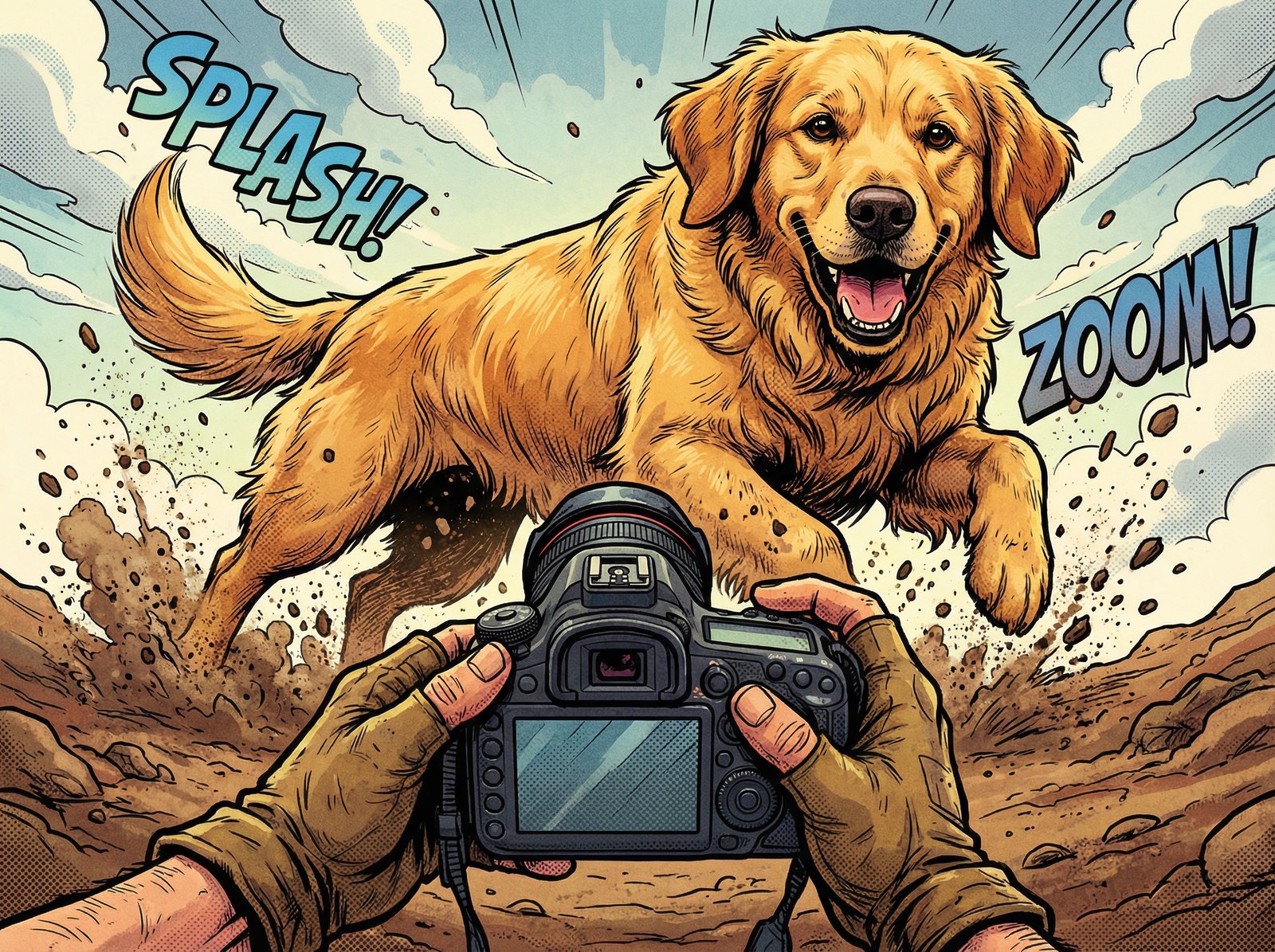
One of the biggest mistakes amateur photographers make is shooting from a standing position. To capture the intensity and “soul” of an action shot, you need to see the world from the dog’s perspective.
Getting low to the ground—yes, even if it means getting a bit muddy—creates a more immersive and heroic feel. It makes the jumps look higher and the runs look faster.
4. Anticipate the “Apex”
Every sport has an “apex” moment. In Agility, it’s the moment the dog is suspended at the highest point of a jump. In Mushing or Bikejoring, it’s when all four paws are off the ground.
Don’t just spray and pray with your shutter. Study the dog’s rhythm. According to American Kennel Club (AKC) photography insights, understanding the mechanics of a dog’s gait helps you predict exactly when to hit the shutter for that “floating” effect.
5. Safety and Ethics
No shot is worth a dog’s stress or injury. Ensure the environment is safe, the dog is hydrated, and you aren’t interfering with their performance or the handler’s cues. A happy dog makes for a much better subject! Keep yourself safe too, your friend needs you!
6. Action Photography with Your Smartphone
You don’t need a bulky DSLR to capture great action shots. Modern smartphones are packed with AI-driven features that can handle movement surprisingly well, though the technique differs slightly between operating systems.
-
Burst Mode is Key: Instead of trying to time a single click, hold down the shutter button (or volume button) to activate Burst Mode. This captures dozens of frames per second, allowing you to pick the exact millisecond where your dog looks like a superhero.
-
The OS Difference (iOS vs. Android):
-
iPhone (iOS): Apple’s “Deep Fusion” and Smart HDR work wonders, but for action, the Live Photos feature is a secret weapon. You can take a Live Photo and later “Select Key Photo” from the edit menu to find the sharpest frame.
-
Android (Pixel/Samsung/etc.): Many high-end Androids feature a “Pro Mode” that allows you to manually set the Shutter Speed (look for the ‘S’ icon), mimicking a professional camera. Google Pixel users can also utilize “Top Shot”, which suggests the best frame from a short video burst.
-
-
Focus Tracking: On most modern phones, you can tap and hold on your dog on the screen to “AE/AF Lock.” This ensures the camera stays locked on your pet even as they move across the frame.
Pro Tip: According to CNET’s photography guides, the most significant limitation of phones is the digital zoom. To keep your action shots crisp, avoid zooming in; instead, get physically closer to the action or crop the photo afterward.
Our Blog is full of more fun and informative content for you and your best furry friend, keep watching us!