When we watch a dog zip through an Agility tunnel or navigate a Hoopers course with surgical precision, it’s easy to focus solely on the physical prowess—the speed, the tuck of the paws, the lean of the body. However, the true engine behind a champion canine athlete isn’t just muscle; it’s psychology. In this case canine athlete psychology.
Understanding how a dog thinks, focuses, and stays motivated is what separates a “good” run from a “gold medal” run.
1. The Power of “Drive” and Motivation
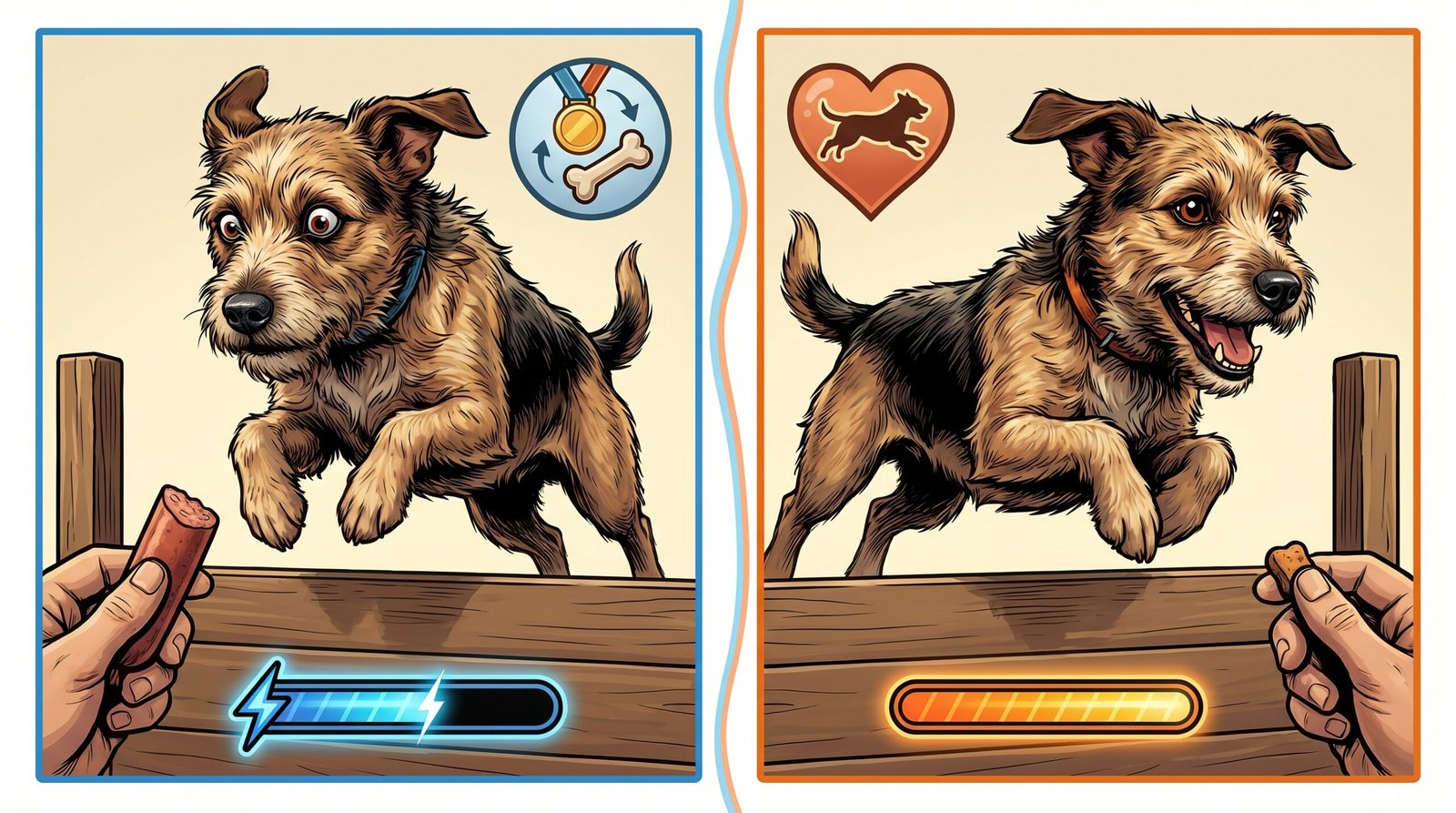
In canine sports, “drive” is the internal engine that pushes a dog to perform. However, motivation isn’t a one-size-fits-all concept. According to researchers like Dr. Sophia Yin, positive reinforcement is the cornerstone of developing a motivated athlete.
-
Intrinsic vs. Extrinsic: Some dogs are intrinsically motivated by the “job” itself (the joy of running), while others require extrinsic rewards like high-value treats or a favorite tug toy.
-
The Reward Gap: Successful handlers minimize the “gap” between the task and the reward, ensuring the dog associates the mental effort of the obstacle with a massive psychological payoff.
2. Focus: Maintaining Clarity Amidst the Chaos
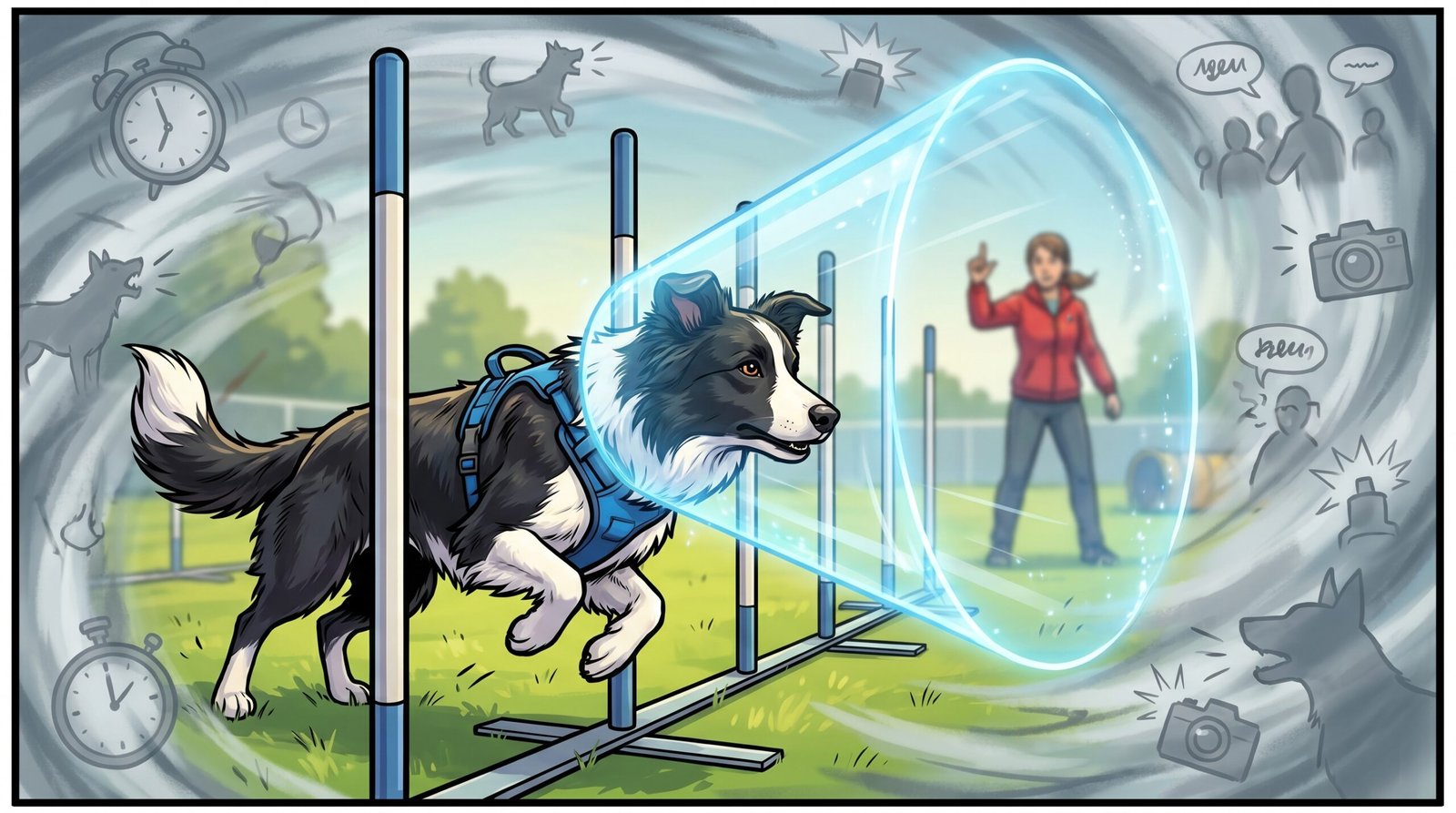
A competition environment is loud, crowded, and full of distracting scents. A canine athlete must utilize selective attention. This is the ability to tune out the barking of a nearby terrier to focus solely on the handler’s physical cues and verbal commands.
“Focus is a muscle that must be trained. In sports like Agility, the dog isn’t just following a hand; they are performing high-speed pattern recognition under pressure.”
3. Arousal Levels: Finding the “Sweet Spot”
The Yerkes-Dodson Law, a psychological principle often applied to human athletes, applies to dogs as well. It suggests there is an optimal level of arousal for performance:
-
Under-aroused: The dog is bored or distracted, leading to slow times.
-
Over-aroused: The dog is “over the top,” leading to knocked bars, missed contacts, or “zoomies.”
-
The Optimal Zone: The dog is alert, focused, and responsive. Identifying your dog’s unique “sweet spot” is the key to consistency in sports like Canicross or Mushing.
4. The Handler-Dog Bond: Synchronized Psychology
Canine sports are a team effort. Dogs are incredibly sensitive to emotional contagion. If a handler is nervous, the dog’s cortisol levels can rise, affecting their decision-making on the course. A study published in Applied Animal Behaviour Science suggests that dogs mirror the stress levels of their owners during competitions. Staying calm and “Stoic” as a handler helps your dog remain confident.
Conclusion
Training a canine athlete is 50% physical conditioning and 50% mental fortitude. By understanding the nuances of canine psychology, we can build a partnership based on trust, clarity, and genuine enthusiasm. Whether you are aiming for the podium or just having fun in the backyard, remember: a happy, focused mind leads to a fast, agile body. And never forget: the safety and wellbeing of your pup comes before everything else!
Stay tuned on our Blog for more great canine world content